Polyurethane Heavy Duty Mud Flaps: Built to Last
April 18, 2024
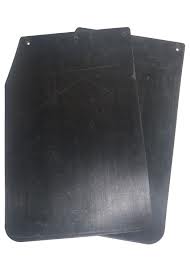
When it comes to heavy-duty vehicles like lorries and diggers, protecting them from road d...
Read Full ArticleIf you’re looking for a wheel material that’s suitable for a wide number of applications and offers a host of benefits, you’ve likely come across polyurethane. But are polyurethane wheels good and actually worth your investment? The simple answer is yes! These are just five of the broad number of benefits that polyurethane wheels offer. […]
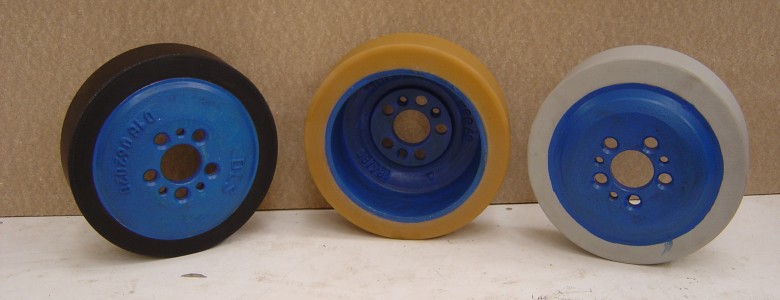
If you’re looking for a wheel material that’s suitable for a wide number of applications and offers a host of benefits, you’ve likely come across polyurethane. But are polyurethane wheels good and actually worth your investment?
The simple answer is yes! These are just five of the broad number of benefits that polyurethane wheels offer.
From the smallest guide wheel to massive cable drum rollers, polyurethane is increasingly the core material of choice. That’s because any basic wheel or caster (device usually attached to a larger piece of machinery to create a smooth motion) can be improved by creating a PU replacement.
Polyurethane can create all the immediately apparent physical properties you need.
This includes creating wheels, casters, spokes or forks in any colour or size, precision finished to slot into place instantly. The moulding process means these wheels can also have any physical features you need, including grooves, slots, holes and patterns. The possibilities are vast.
Even an apparently simple caster can take many forms, depending on the bearing type, size and functional spec, but polyurethane means a quick turnaround.
Related article: How to Cast Polyurethane: Everything you Need to Know
The work to create your ideal industrial wheel actually starts much earlier than designing your micro-accurate mould though.
Often the main reason polyurethane is chosen instead of alternative substances, is that its unique chemical blend can be formulated to create a wide range of shore hardness and tensile strength. In general, polyurethane can be a light foam or adhesive, or as hard as metal. So, you can build a wheel with the level of rebound energy you need. Creating a motion that needs less force behind it.
You also need to be confident that anything that is being wheeled over a floor or part of your production line doesn’t damage the surface it travels over. Something that smooth polyurethane is more than capable of promising. It also has excellent noise dampening capabilities.
Which all means that when specifying an industrial wheel for a new machine or to replace a worn part, you can literally request any performance criteria. Including industrial wheels with high load capacity.
Getting the blend and mould perfectly formed to create the best result, is still not the end of polyurethane’s many advantages over its rivals.
It is an ‘all-round’ powerhouse. One that can stand up to incredible amounts of wear and tear. Including vibrational energy and the sort of abrasive action that would damage alternative materials.
Polyurethane industrial wheels are also resistant to moisture, oily substances, moulds, mildew and many corrosive chemicals. They will continue to perform brilliantly in extreme temperatures and in very wet conditions. Without warping, cracking or flaking as rubber would.
It also provides your industrial wheels with great traction, for when you want to avoid slippage.
Polyurethane industrial wheels can stand up to incredible force, while still holding their original shape. This strength is easily comparable with metal wheels and other parts, but it doesn’t dent or buckle like metal.
Related article: Polyurethane can be used as an adhesive
As polyurethane is so incredibly versatile, accurate and durable as a material for industrial wheels, you might imagine that the cost is greater than metal or rubber parts.
Not so. Remarkably, specifying polyurethane industrial wheels could well save you money, as they can be produced for a low unit cost by the team at Custom Moulded Polyurethane.
Keep in mind that the durability factor also makes then a cost-effective way to create task-specific wheels, rolls and casters. As you won’t need to replace them for a long time, you save money on new parts and improve productivity by eliminating downtime for repairs and replacements.
Related article: Polyurethane for the Boat Industry
Polyurethane is capable of crafting a highly diverse range of parts, including wheels for all purposes.
As shown by our wheel and tyre product page, the team at CPU have been tasked with creating direct bond drive wheels, small guide wheels, heavy load wheels and casters for all manner of trolleys and roll cages, as well as forklift truck wheels, track idlers and cable wheels.
We can also bond polyurethane to any metallic substrate you need. Such as aluminium, cast iron and all forms of steel.
Call us to drive your industrial wheel project forward, with a free quote and advice.
The best way to oil the wheels of industry could well be to use a material for parts that doesn’t need to be lubricated! Which is why so many specifiers are ‘coming round’ to the idea of Polyurethane industrial wheels.
If you need to specify an industrial roller finish for your manufacturing process, this article explains why polyurethane rollers outperform other materials. The humble roller fulfils a multitude of roles while coping with ‘heroic’ levels of pressure, friction, and potential environmental interference. It is generally a component that needs to rotate on a central axis reliably and smoothly, often at speed. Some roller applications involve feather light operations, while others require the material used to have significant load-bearing abilities.
As the form, function, and fortitude of each roller can be crucially important, choosing the best material for prototyping rollers is vital. For increasing numbers of machinery manufacturers and engineers, the top choice is Polyurethane rollers. That is equally true whether it’s a roller for intricate, smooth pulley operations, fast operating conveyors, or heavy-duty printing presses for example. In fact, polyurethane outperforms other materials for rollers used in moving, squeezing, spreading, pressing, feeding, laminating and coating too! Why are polyurethane rollers so effective?
Related article: Polyurethane Wheels and Roller Repair Re-covering
Polyurethane can be created to meet any tensile specifications – from soft foam to rock-hard items with the strength of metal. That is just the start of the many advantages of polyurethane in roller manufacturing. Other reasons to choose polyurethane rollers include the following:
Polyurethane is incredibly strong and long-lasting in all its forms and guises. Its unique structural formation enables it to withstand all the ‘perils’ that can impact other materials like rubber, metal and even plastics.
That includes having an unrivaled ability to resist friction, abrasion and a wide range of contaminants.
Alternative materials for roller production can’t boast the same level of resistance to daily operations and climate. For example, some types of rollers split, crack, flake or roughen from excessive use or pressure. Others become slick or distorted by oil, moulds, water or chemicals for instance.
This makes polyurethane perfect for rollers operating in fast-moving equipment, or for outdoor applications.
A great example is a cable drum roller which needs to have excellent weight-bearing properties and be reliable, even in difficult conditions.
The durability of polyurethane rollers also makes them an asset when it comes to maintenance schedules for machinery or equipment. Lower replacement rates have a significant impact on machinery downtime and resulting costs.

One of the most common issues with rollers for machinery and handling equipment is that they can tear suddenly, and create a ripple effect of issues. In some cases, for example conveyor belt rollers, demand on performance is unrelenting. A split roller won’t just delay production, it could also create damage to products being transported.
The durability of polyurethane greatly reduces this risk, as the tensile robustness it offers creates rollers with incredibly high tear resistance.
Also read: Industrial Wheels: The Benefits of Polyurethane
Another factor that can reduce the effectiveness – and lifespan – of rollers made from alternative materials, is temperature. Operating in extreme heat or cold can erode some types of rollers, or certainly make them function less reliably due to swelling or compression.
Take for instance rubber rollers. The long chains in their structure can get hot, and start to vibrate, causing the material to contract.
Even the slightest alteration in the dimensions and tensile properties of a roller can affect its performance, and therefore its reliability and ability to support production targets.
Polyurethane rollers consistently hold their shape and integrity through temperature ranges – including not heating up when intensive friction is applied.
Read more:What is MOCA in Polyurethane?
There are times when the value of a polyurethane roller is not about how durable and long-lasting it is. Instead, the insulation properties of polyurethane rollers ‘move’ along the priority list.
There are numerous applications for rollers when sound levels are important. Polyurethane rollers are excellent at controlling and dampening noise. That is why polyurethane is now a common choice for noise-dampening structures in buildings, as well as being a great heat insulator.
Keep reading: Quality polyurethane sheet – A complete buyer’s guide

Having illustrated why polyurethane rollers outperform other materials, it’s important to point out that another reason to specify rollers made from this material is its cost-effectiveness.
You can get these components quickly – and at a favourable unit cost – by using a UK-based manufacturer of polyurethane rollers!
The team at Custom Moulded Polyurethane can take any prototype spec for rollers, and swiftly produce a finished item. That includes larger runs of polyurethane rollers and colour-coded units for different purposes.
Related article: Are Polyurethane Skateboard Wheels Good?
Polyurethane wheels also offer minimal noise during travel, which is desirable for obvious reasons. Making the working environment quieter improves employee well-being considerably. Polyurethane can act as a much more efficient shock absorber than traditionally steel, iron, or even nylon wheels. This means that even when the flooring surface is uneven, polyurethane wheels offer considerably quieter operation.
Compared to other wheel materials, polyurethane offers excellent friction, which can be especially useful when towing heavy loads on smooth or uneven flooring. This can be especially useful if you’re considering polyurethane for use in driven wheels, as it can help provide more traction. Ultimately this means equipment with polyurethane wheels is less likely to tip over and slide, and less likely to become stuck.
Related article: Polyurethane For The Car Industry
Prices for polyurethane wheels vary considerably, as do all wheel materials, depending on the specific application you need them for. What polyurethane wheels do offer, however, is excellent value for money thanks to the aforementioned characteristics. This means you’re making a longer-lasting investment. When treated carefully, polyurethane wheels can continue operating perfectly reliably for many years – even in heavy-duty applications.
Related article: Polyurethane Wheels and Roller Repair Re-covering
If you’re looking for a reliable, durable, and rugged wheel material that you can rely on, polyurethane makes a compelling choice. Polyurethane is a highly versatile material, which means wheels can be made to suit a wide number of applications in a number of sectors. Whether your requirements are for gentle weights or heavy-duty loads, there is going to be a polyurethane wheel available to suit your budget.
Spend less time worrying about damage to your flooring, awkward handling, instability, and more time actually working. Polyurethane wheels considerably reduce downtime, because of their durability and impact protection, meaning less time spent on maintenance. Every minute a piece of equipment is not operational costs you money, which makes polyurethane wheels an even more compelling investment.
But what about the environmental impact? You might not consider polyurethane a “green” material, but you need to remember to widen your focus to the whole life of the wheel rather than just its construction. Polyurethane wheels become more environmentally friendly when you consider how long you’re going to be able to use them effectively, and how resistant they’re going to be to damage that might cause wheels of other materials to be binned.
So if you’re looking for a reliable, long-term investment when choosing a wheel material, you have to consider polyurethane as a leading contender.
Let us know your requirements using the form below and we'll send you a free estimate within 48 hours.
"*" indicates required fields