Comprehensive Guide to Polyurethane Applications
April 18, 2024
Although you may not know it, at some point you will have encountered a polyurethane produ...
Read Full ArticleWhen keeping the wheels of industry turning, balancing cost-efficient parts with superb performance and durability isn’t easy. We show how re-bonding polyurethane wheels achieve these aims. The humble wheel serves a multitude of vital roles within industrial equipment. Often under intense pressure in terms of speed, load, and sources of friction. Specifying wheels correctly – […]
When keeping the wheels of industry turning, balancing cost-efficient parts with superb performance and durability isn’t easy. We show how re-bonding polyurethane wheels achieve these aims.
The humble wheel serves a multitude of vital roles within industrial equipment. Often under intense pressure in terms of speed, load, and sources of friction. Specifying wheels correctly – and constantly assessing their integrity – can be vital to your productivity.
‘Turning around’ prototypes and large consignments of wheels quickly can also be the difference between expensive downtime, or seamless maintenance work.
For all these reasons and more, re-bonding polyurethane wheels are increasingly common. This article explores what that involves and more of the advantages of this option for commissioning industrial wheels.
First, it’s important to remind ourselves why PU is so often the material of choice for wheels, rollers, and other key parts of industrial machinery and equipment.
Among the compelling advantages of polyurethane is its ability to create parts that are 100% accurate. Not just in terms of dimensions, but also tensile properties and therefore performance capabilities.
It is also the ideal choice for when a wheel needs to be wholly reliable in its operation, maintaining its integrity in the face of heavy-duty tasks, extreme temperatures or the presence of moisture, oils and other contaminates for example.
Incidentally, polyurethane can also be a great insulator, and a way to dampen vibrations too.
PU has sustainability advantages and can be successfully bonded to various metallic substrates, including aluminium, steel, and cast iron.
For all these reasons, the best material to make the following types of wheels from is polyurethane:
This is by no means a complete list.
When commissioning urethane wheels for various industrial wheel applications, one of the primary things you are buying is durability.
This material is long-lasting and resilient, even when it involves bonding urethane to metal. It performs much better than alternative materials when exposed to friction, abrasion and significant load-bearing. However, even polyurethane wheels don’t last forever.
That’s when services to re-bond polyurethane wheels add even more to this material’s impressive credentials.
Having the option to re-bond polyurethane onto other parts – including metal hubs – can make it possible to replace essential parts quickly. You can also save considerable money, compared to buying OEM (original equipment manufacturer).
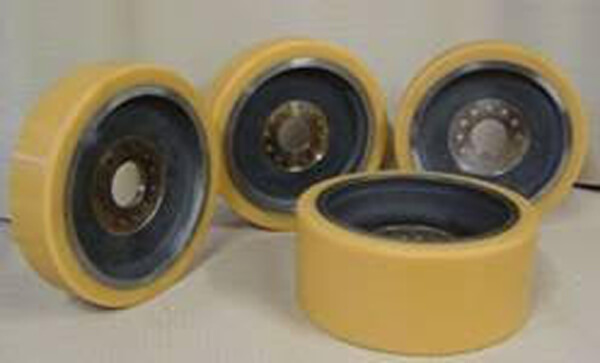
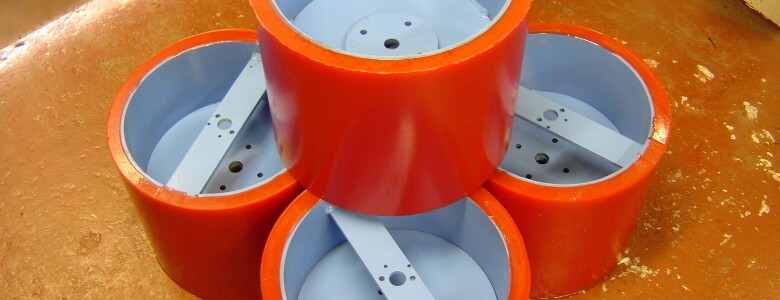
Instead of replacing the entire wheel, polyurethane wheel experts create a fresh external tread. This is achieved by using specialist heating equipment to remove the old layer of PU. The hub would be thoroughly assessed for damage before the polyurethane supplier firmly bonds a fresh, well-adhered layer.
Any finishing work for polyurethane wheels can then also be speedily achieved. Including detailing work to create the perfect wheel for your industrial application.
Re-bonding polyurethane wheels can be done in advance of the item losing some of its resilience. This enables you to stay ahead of any maintenance disruption.
A good example is retreading forklift truck wheels with re-bonded polyurethane regularly, keeping this equipment fully operational with flawless traction. Including coping superbly with chemical spills and other contaminants on your warehouse floors.
The cost of maintaining a forklift truck or pallet trolley constantly in use can be significant. However, allowing it to become compromised can be even more ‘costly’, as you could inadvertently breach Health & Safety compliance and put your workforce and reputation at risk.
You can gauge from the above just some of the industrial applications there are for polyurethane wheels. The option to then commission re-bonding – to save money and time – makes this an even more attractive option.
Keep in mind that re-bonding as opposed to commissioning new industrial wheels enables you to add another sustainability measure to your company’s record for environmental awareness too.
CMP provides a re-bonded industrial wheels and tyres service, which features all the quality standards that make us a leader in polyurethane part supply.
Having your used or worn out rollers or Polyurethane Wheels re-bonded or repaired will save you money and keep your machines running at peak efficiency.
By throwing away your used and worn out rollers, you endure the expense of ordering completely new parts, core and all.
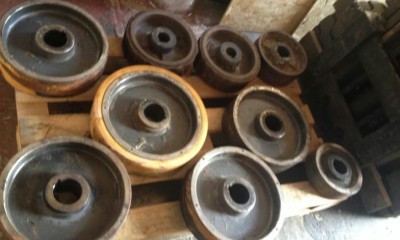
In most cases the body of your roller, or metal core, is still in good condition and only the rubber is worn out.
Related article: Are Polyurethane Skateboard Wheels Good?
We can recover or repair your rollers and polyurethane wheels for a fraction of the price of having the compete roller replaced.
We can strip back your rollers and recover the core with the highest quality polyurethane and finish to your exact specifications.
At CMP we are able to repair or recover a wide variety of roller and polyurethane wheels, including:
Related article: Are polyurethane wheels good?
Our in-house processes make us very competitive from initial design concept right through to delivery, whether recovering used polyurethane rollers/wheels or supplying new ones, we strive to manufacture quality products that exceed your durability and performance needs.
For more information please see our polyurethane wheels page, or contact us to discuss your project.
Let us know your requirements using the form below and we'll send you a free estimate within 48 hours.
"*" indicates required fields